
RHS Badminton 2026: Girly Pop

Girlypop is our interpretation of the maximalist, hyper-pop aesthetic of late 90s and early 2000s femininity: bright colours, playful excess, kitsch decoration and unapologetic fun.Plants are often framed as calming and restorative, but they can also be joyful, energising and absurd in the best possible way. In the Girlypop Biosphere, we explore the place of girlhood and femininity within indoor horticulture, and how even the most over-the-top spaces can be softened, grounded and brought to life through nature.This bright, planted world celebrates bold foliage, colour, nostalgia and gaudiness. Visitors are invited to step inside a playful vision of indoor gardening where houseplants are not just peaceful, but expressive, uplifting and fun.

What the garden showcases

Girlypop Biosphere explores contemporary conversations around femininity, nostalgia, maximalist interiors and self-expression within modern plant culture. The exhibit challenges the idea that indoor horticulture must be minimalist or wellness-focused, instead presenting houseplants as playful, expressive and emotionally driven.

The design also reflects the growing popularity of immersive interiors, trend-led planting and social-media-inspired aesthetics, particularly amongst younger generations discovering indoor gardening through online culture. By combining dense tropical planting with bold colour and kitsch materials, the exhibit highlights how horticulture can intersect with fashion, identity, and contemporary visual culture in unexpected ways.

Want to shop the look?

Below are plants that you can shop to make you own GirlyPop garden at home!

The Planting

When people ask me how I choose plants, my answer is usually another question:

"Tell me about your home."

How much light do you have? Is the room warm or cool? Is it dry or humid? Where do you want the plant to live?

I don't believe there's one "easy" houseplant or one "difficult" houseplant. I think successful plant care comes from matching the right plant to the right environment. Once you understand the conditions you're working with, growing plants becomes far less intimidating.

That philosophy has shaped every planting decision in Girlypop Biosphere.

While the display celebrates the playful colours and bold aesthetic of late-90s and early-2000s pop culture, it also highlights the incredible diversity of houseplants. The collection brings together familiar favourites alongside unusual collector's plants, colourful foliage with architectural forms, rainforest species with desert survivors and plants that have evolved in some truly extraordinary ways.

Most importantly, I wanted to show that houseplants aren't static. They're constantly responding to the world around them. They adapt, they change, they surprise us and, if we're willing to observe them, they teach us an enormous amount.

Colour Without Flowers

One of the biggest inspirations behind Girlypop was proving that flowers aren't the only way plants can bring colour into our homes.

The planting is filled with vibrant foliage from Caladiums, Philodendrons, Crotons, Fittonias, Ficus, Bromeliads and carnivorous plants. Together they create a palette of electric pinks, lime greens, deep burgundies, oranges and almost every shade in between.

If there is one plant that captures the spirit of Girlypop, it's the Caladium.

I've always loved how unapologetically colourful they are, but I've become just as fascinated by how adaptable they can be. The Caladiums featured in the exhibit have spent the last month gradually acclimating to outdoor conditions. Conventional advice often tells us these plants are delicate, yet I've found that when introduced slowly to new conditions, they can tolerate far more than many people expect.

These plants remind us that many are more adaptable than we often assume, encouraging a sense of hope and possibility in your plant care journey.

Big, Bold & Surprisingly Easy

Large tropical plants create much of the structure within the exhibit.

Philodendrons, Alocasias, and Ficus provide height, movement and that unmistakable indoor jungle feeling.

Alocasias are among the most loved yet also the most difficult plants. But if they are grown under the right conditions and with simple care routines, they absolutely thrive, even with the care of a beginner. This reassures visitors that they can succeed with proper guidance. 

For Girlypop, I've chosen varieties that I find much more forgiving than some of their fussier relatives, yet they still deliver all the drama people expect from Alocasias.

The Philodendrons tell a similar story. Rather than selecting only giant green leaves, I've chosen varieties with vibrant orange, lime and copper new growth to demonstrate just how diverse this incredible group of plants can be.

Guzmania ‘Libby’ in pot

The Wonderful World of Bromeliads

Few plant families demonstrate diversity better than the bromeliads.

Within Girlypop, you'll find colourful Neoregelias, striking Earth Stars (Cryptanthus), elegant Aechmeas, and delicate Tillandsias, more commonly known as air plants.

Some grow attached to trees, others grow in the ground, yet they're all members of the same remarkable family.

I chose them because they offer something completely different. Incredible textures. Architectural shapes. Bold colours. Plants that almost look sculpted rather than grown.

Despite their exotic appearance, they're also some of the toughest plants out there. They're wonderfully resilient and have evolved ingenious ways of collecting and storing water, making them far more adaptable than many people realise.

Forest Cacti & Epiphytes

This is probably my favourite group of plants in the entire exhibit.

Most people imagine cacti growing in hot deserts, but some of the most fascinating species actually come from tropical rainforests.

Rhipsalis, Lepismium, Epiphyllum, Selenicereus, Aporocactus and even Dragon Fruit all belong to this incredible group of rainforest cacti. Alongside them, you'll find Hoyas, another favourite of mine, which share many of the same climbing and epiphytic habits.

They're some of the most forgiving houseplants I've ever owned.

Many thrive in average homes, tolerate a little neglect and reward growers with beautiful trailing stems, fascinating growth habits and, in some cases, spectacular flowers. They are also very adaptable to lots of different lighting conditions and handle some sun stress beautifully, creating beautiful pinks and reds.

I love introducing people to these plants because they completely change our expectations of what a cactus can be.

Desert Survivors

At the opposite end of the spectrum are the succulents and desert plants.

Aeoniums, Echeverias, Agaves, Crassulas, Sedums, and other succulents showcase an entirely different survival strategy. Instead of growing in humid rainforests, they've evolved to store water, allowing them to survive prolonged periods of drought.

One of my favourite experiments has been gradually increasing the light levels for several of the Aeoniums and Hoyas featured in the exhibit.

As they acclimated, they responded by producing vibrant pinks, deep reds and richer variegation—a natural process often known as sun stressing. It isn't about damaging the plant, but about encouraging it to display colours that often remain hidden under lower light.

Watching plants respond to their environment like this never gets old.

The Plant That Started It All

If I had to blame one plant for my obsession with houseplants, it would probably be Tradescantia.

They're wonderfully forgiving, incredibly easy to propagate and come in so many different colours and shapes.

They're also generous plants. Take a cutting, place it in water, and before long you'll have another plant to share with a friend.

For me, Tradescantia represents everything I love about houseplants. They're accessible and rewarding, and they encourage people to experiment without worrying about getting everything perfect.

The Weird & Wonderful

One of my favourite moments in the shop is when someone stops, points at a plant and asks,

"What on earth is that?"

I've always wanted Plant Studio to be a place where people discover something they've never seen before.

Girlypop is filled with those moments.

Stephania erecta, with its enormous woody caudex, looks more like a sculpture than a houseplant. Ledebouria socialis, or Silver Squill, is one of my absolute favourites. It's wonderfully easy-going, endlessly interesting and a plant I wish more people knew about. The unusual spotted foliage and quirky growth habit make it a constant conversation starter.

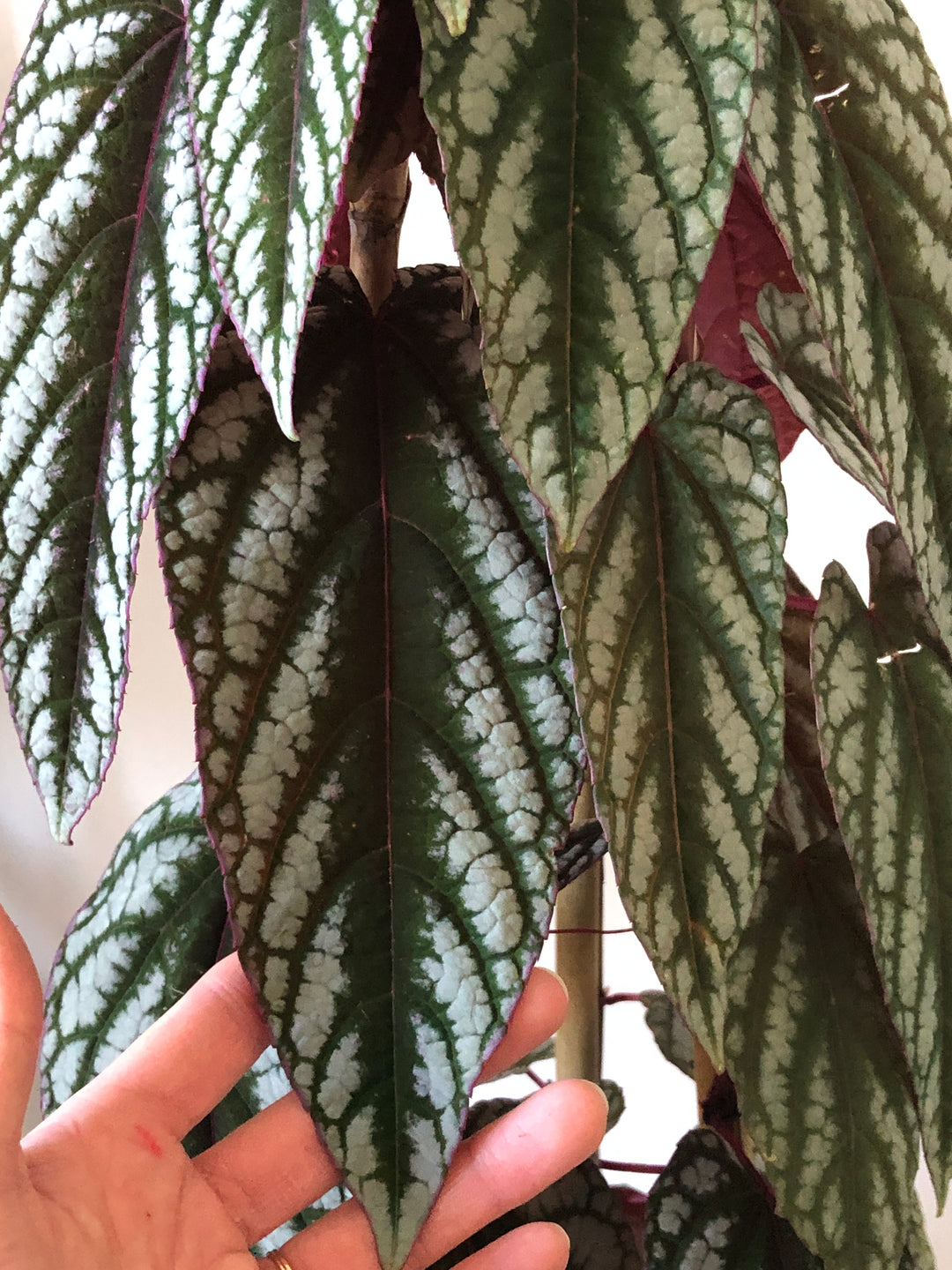
Then there's Cissus discolour.

The plant featured in the exhibit started life as one of our shop rescues. For months, it struggled, dropping almost all of its leaves every winter, and I thought I was doing something wrong.

Eventually, I realised it wasn't struggling at all.

It was simply following its natural rhythm.

Every spring, it bursts back into vigorous growth and has become one of the healthiest plants in my collection.

Sometimes plants don't need us to fix them.

They simply need us to understand them.

Nature's Strangest Plants

No houseplant collection would be complete without a few carnivorous plants.

Venus Flytraps, Pitcher Plants, Butterworts and Sundews always attract attention, and for good reason.

These remarkable species evolved in nutrient-poor habitats where trapping insects became an ingenious way of supplementing what they couldn't obtain from the soil.

They're a brilliant reminder that the plant kingdom is every bit as strange, inventive and surprising as the animal kingdom.

A Celebration of Curiosity